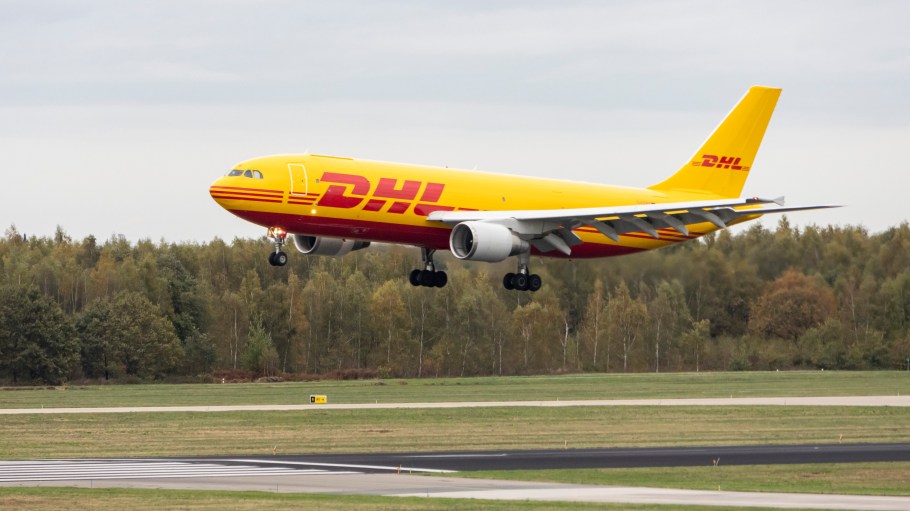
DHL Express says its air fuel supplies in Europe are secure for the summer months, alleviating concerns for customers days after the European Commission warned the EU’s jet fuel market could tighten up if the situation in the Strait of Hormuz does not improve within weeks.
Mike Parra, the CEO of the European branch at DHL Express, told Reuters that no fuel-related disruptions are expected at major EU airports and cities.
“All in all, there have not been any shortages yet,” Parra said. DHL’s sigh of relief follows prior indicators early last month that the company could secure fuel for its European airline fleet through June. At the time, DHL Group CEO Tobias Meyer said there was less certainty about supply across Asia.
Related Stories
Last Thursday, the commission’s energy department cautioned of market compression, but noted that while the EU has been experiencing price effects, there has thus far been “no physical supply disruptions at consumer level.”
In the weeks after the war in Iran started, EU member states began to show concerns about fuel shortages at their airports, with major global airlines having dialed down their service schedules to due the potential supply issues and escalating prices. However, fuel markets throughout those countries have loosened in recent weeks amid increased imports from the U.S., western Africa and South Korea.
According to Parra, DHL’s contingency planning efforts and network of about 295 aircraft would allow it to handle potential localized shortages. The jets can be fueled at alternative locations, while the company can also shift air cargo to road transportation or reroute via different hubs.
“If things started to get really ugly and beyond normal, we have a very dynamic aviation network and network planning,” Parra said.
The CEO said client behavior has not shifted since the company decided to change to weekly fuel surcharge updates instead of monthly to better reflect the energy price fluctuations. Most recently, the surcharge stood at 48.75 percent for international express shipments. Both FedEx and UPS also pass on additional costs through a surcharge.
The fuel surcharge is only being used to cover costs, with Parra saying, “It’s not meant to become a profit center.”
Logistics companies across all transportation modes have tacked on surcharges since the start of the Middle East conflict as oil prices escalated, with Maersk saying it expects to pass on an additional $500 million in monthly costs.
Skyrocketing oil costs have come because of the de facto closure of the Strait of Hormuz, as Iran’s Islamic Revolutionary Guard Corps (IRGC) has attacked various vessels and oil tankers passing through the conduit. Roughly 20 percent of the world’s oil transits the strait, thus limiting the supply for countries that rely on Middle Eastern markets to import from the region.
Even with the disruption, second-quarter results for the division are expected to be in line with the first, Parra said. DHL Express Europe reported revenue of 2.87 billion euros ($3.34 billion) in that quarter.
Along with the rocky supply environment, European carriers still must endure the volatility in fuel prices. After nearly doubling to $209 per barrel from the start of the war on Feb 28 to its peak on April 6, global jet fuel prices have dipped six of the past seven weeks. In that stretch, costs have plummeted 32.2 percent to $141.64 on May 29, according to the International Air Transport Association (IATA) Jet Fuel Monitor, which showcases data from energy information provider Platts.
But early Wednesday, the IATA’s fuel head Daniel Chereau warned that surging jet fuel refinery profit margins—known in the industry as crack spreads—have hit the aviation sector hard, and that not all carriers are positioned to hedge their exposure to the costs.
These crack spreads calculate the difference between the price of crude oil and the jet fuel produced from it. In northwest Europe, the jet fuel crack spread peaked at an all-time high of over $121 per barrel in March, according to LSEG data, compared with around $30 per barrel before the outbreak of the Iran war in late February.
At an energy conference held in London, Chereau indicated that fuel shortages could further industrywide demand disruption. Chereau did not name specific airlines or airports which have been worst hit.