
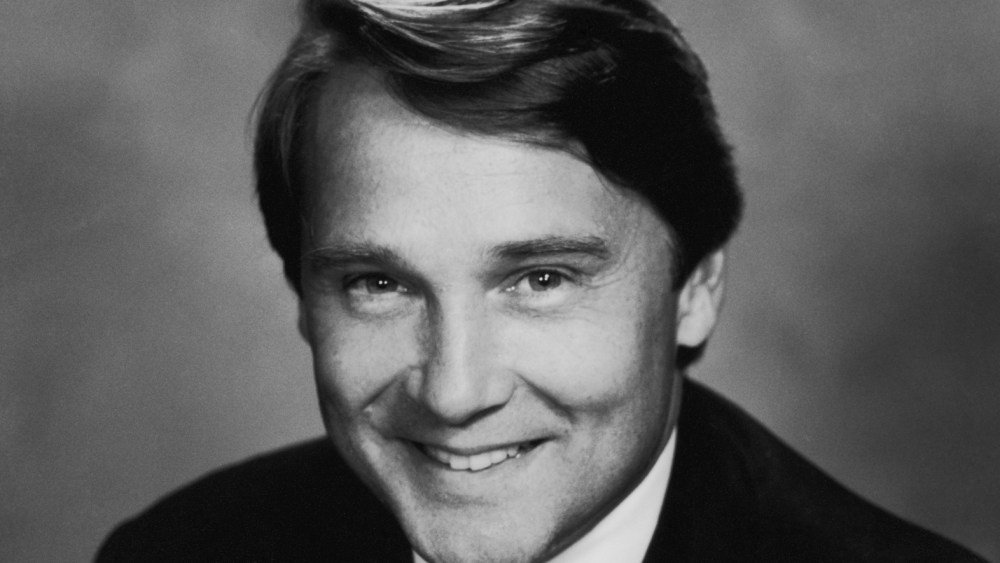
Simon Critchell, a luxury executive who led Cartier in North America and later Alfred Dunhill, died May 20 in New York at the age of 80.
Critchell died of complications from cancer at Memorial-Sloan Kettering in New York, according to his daughter, Vanessa Critchell Daugherty.
Known as a charismatic executive who exuded warmth and had a sparkle in his eyes, Critchell spent his career building some of the world’s most recognizable luxury brands. He was born on Feb. 28, 1946, in London, and spent his early years in Johannesburg and Cape Town before returning to England, and growing up in London and Essex. He attended King’s College London, where he studied modern languages, and later INSEAD Business School in Fontainebleau, France.
Related Articles
According to his daughter, Critchell was working in an art gallery after King’s College and because he was multilingual, his friend encouraged him to attend INSEAD, which Critchell always credited for launching his career. “His French was so good for a British person,” she said.
You May Also Like
Critchell started his cosmetics career at L’Oréal in 1972 and moved to the U.S. to become part of the fragrance division of Cosmair Inc., the parent firm of Lancôme, in 1979. Two years later, he was named vice president and general manager of the fragrance division and in 1984 was promoted to senior vice president and general manager of Lancôme U.S.
Critchell left Lancôme to join Cartier as chief executive officer of North America, where he worked from 1990 to 1998. He reported to Pierre Haquet, general director of Cartier International in Paris. At the time, the 43-year-old Critchell said, “This was an extremely difficult decision to make. It was a prospect for a new challenge, and I had a desire for change.” Cartier had contacted him for the position.
“We saw many people of good quality, but we were looking for a certain combination of characteristics which we found in Critchell. He is an aggressive marketer, has an international background and understands the retail business well. Also, because he comes from another industry, he brings with him a fresh perspective,” said Haquet at the time.
Critchell was responsible for Cartier’s full range of corporate activities in the U.S., including the company’s retail stores as well as its wholesale divisions, Les Must de Cartier and Parfums Cartier. “In the prestigious cosmetics business you have to be good at wholesale and retail, which will help me at Cartier since it has both a wholesale and retail business,” said Critchell at the time. He acknowledged his background in the fragrance industry would help Cartier’s to grow, though he said, “The fragrance business is part of the total environment here. It’s an area for expansion, as are all the other areas of Cartier’s business.”
During his time at Cartier, Critchell spearheaded a major repositioning of its wholesale distribution across the U.S. and Canada, strengthening the brand’s footprint and positioning in the luxury market. In the late 1990s, Critchell became CEO of Richemont North America until his transition to Alfred Dunhill. (Both Cartier and Dunhill are part of Richemont). Critchell relocated to London in 2001 to become worldwide CEO of Alfred Dunhill, a post he held until he retired in 2006.
In a WWD story in 2001, Critchell said Dunhill, part of London’s tony Mayfair District, was looking to attract women by softening the area’s image, known for its aroma of cigar smoke, bespoke tailors and men with clipped accents parading the streets in tapered pinstripe suits. During his tenure, Critchell led an overhaul of the brand, restoring its visibility and relevance.
He said when the luxury men’s brand moved to its New York flagship at 711 Fifth Avenue, they would unveil a new global store concept that was inviting to women, with a softer line of accessories, a more unisex appeal and a prominent custom-tailoring service open to both sexes. “Before, Dunhill has always been a men’s brand, with menswear, leather and hard goods such as jewelry and watches,” Critchell told WWD in 2001. “Many people didn’t really know what it represented, no one perceived a real focus. The new Dunhill is not just about menswear anymore.
“Over the years, Dunhill has been a little quiet, a traditional brand,” said Critchell at the time. “But that will change with the new store design and new image, which is not just in the look of the store, but also in the merchandise.”
Following his retirement, Critchell worked as a consultant for the Zegna Group, and in 2011, founded the Topping Rose House in Bridgehampton, N.Y. Along with his business partner and fellow investor William Campbell, formerly of JP Morgan Chase, they developed the property into a successful boutique hotel and restaurant headed by Jean-Georges Vongerichten.
His daughter said that Critchell knew everybody’s name from the elevator man to those who worked at the company. “People felt elevated by him and seen and respected. That was the key. Even if he had a difference of opinion, people didn’t feel judged by him and he knew how to get the best out of people,” she said.
“As a father he was exactly like that,” she added. She recalled being an undergraduate at Barnard, and there would be some problem, “and he would always pick up the phone for me. Literally, he would be in the middle of a meeting with 12 people on the board. He had the ability as a father to make you feel so important,” said Daugherty.
Critchell was an avid squash player and was a lifelong member of the University Club, and also was devoted to piano and painting, which he studied at boarding school.
In addition to his daughter Vanessa Critchell Daugherty, Critchell is survived by his wife, Renee; his son, David Critchell, and five grandchildren.