Across the United States, a quiet but high-stakes regulatory revolution is unfolding. As of early 2026, the battle against per- and polyfluoroalkyl substances—the persistent, bioaccumulative compounds known as “forever chemicals”—has shifted from the halls of Congress to state legislatures and the boardrooms of global retailers.
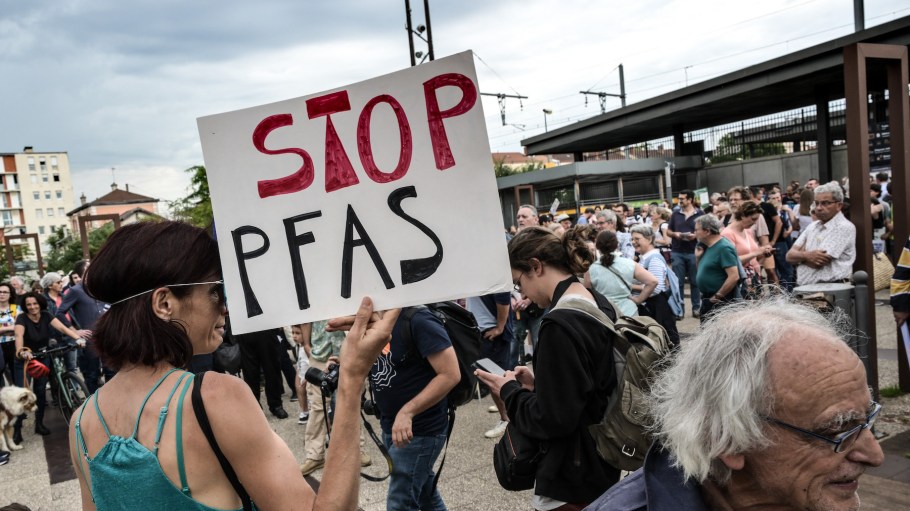
With more than a dozen new state laws taking effect this year and an additional 300 policies under consideration, a patchwork of local mandates is effectively rewriting the rules of the American supply chain.
Related Stories
The stakes are personal and planetary. PFAS, prized for decades for their ability to repel water, oil, and stains, are now linked to a grim catalog of health issues, including cancer, birth defects and endocrine disruption. Because they do not break down naturally, they have permeated everything from the soil of New England farms to the waterproof coating of high-end yoga pants.
The State-Led Mandate
According to a recent report by the Environmental Health Coalition Safer States, 2026 marks a tipping point. While federal action remains sluggish, state policymakers are filling the vacuum. This year, transparency and disclosure laws are going into effect in Connecticut, Oregon, Rhode Island, and Minnesota. In Washington, the rules are surgical, targeting the reporting of PFAS in apparel, footwear and travel gear.
The regulatory philosophy is also evolving. Rather than playing a game of “chemical whack-a-mole,” which means banning one specific compound only to see it replaced by a nearly identical cousin, states such as California, Colorado and Vermont are regulating PFAS as an entire class.
“State policymakers are responding to what communities already know and what they need,” said Sarah Doll, national director of Safer States, in a recent Sourcing Journal report. “Toxic chemicals and plastics are contaminating our lives without our consent. The protections taking effect this year show what strong, health-centered leadership can achieve.”
The impact of these laws extends far beyond state lines. As Cheri Peele, director of government and market policy at Toxic-Free Future, pointed out in an Sourcing Journal report, companies rarely create state-specific products for the U.S. market. When Vermont bans PFAS in textiles or Washington restricts them in furniture leather, the national supply chain pivots to meet the highest standard.
High-Fashion Scrutiny: The Lululemon Inquiry
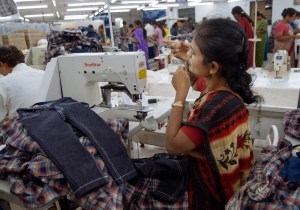
While legislatures draft bills, enforcement agencies are turning up the heat on “wellness” brands. In Texas, Attorney General Ken Paxton has launched a high-profile investigation into the U.S. arm of Lululemon. The probe seeks to determine if the athleticwear giant’s products contain PFAS, which would stand in stark contrast to its branding as a health-conscious, sustainable lifestyle leader.
The investigation follows “emerging research and consumer concerns” regarding chemical compounds in apparel that may lead to infertility and other health crises. Paxton’s office is currently reviewing Lululemon’s Restricted Substances List (RSL) and its internal testing protocols.
“I will not allow any corporation to sell harmful, toxic materials to consumers at a premium price under the guise of wellness,” Paxton said, tying the investigation to a broader “Make America Healthy Again” movement.
Lululemon has denied the allegations, asserting that it phased out PFAS in its durable water-repellent (DWR) coatings during fiscal year 2023. A spokesperson for the company emphasized that their products “meet or exceed global regulatory, safety and quality standards” and undergo rigorous third-party testing.
However, the scrutiny isn’t just coming from the government. Environmental watchdogs like Action Speaks Louder have recently targeted the brand with satirical “Mumumelon” pop-ups in London, highlighting the perceived disconnect between the company’s “net-zero” marketing and its continued reliance on coal-powered manufacturing.
A Federal Tug-of-War
The surge in state-level activism comes at a time of deep friction in Washington D.C. While nearly 350 state legislators have signed letters urging for stronger federal oversight, some members of Congress are moving in the opposite direction.
Earlier this year, a draft bill released by the House Energy and Commerce Committee suggested rolling back key provisions of the Toxic Substances Control Act (TSCA). Critics argue the proposal would weaken the EPA’s authority to restrict harmful chemicals and shortcut safety reviews for new substances.
The divide has created a sense of urgency among state officials. “While Congress considers weakening federal protections, Rhode Island is stepping up,” said State Representative June Speakman. “Families shouldn’t have to find out after the fact that harmful chemicals were allowed into their food, water, or products.”
The Science of Remediation
As the legal battle rages, scientists are racing to clean up the legacy of decades of PFAS use. The primary challenge currently facing the industry is the transition from “long-chain” PFAS (like PFOA) to “short-chain” alternatives. While the latter are marketed as safer because they accumulate less in human tissue, they are more mobile in water and notoriously difficult to filter out using traditional methods.
Researchers at Flinders University in Australia may have found a solution. Using nanosized molecular cages embedded in specialized silica, a team led by Dr. Witold Bloch has developed a method to trap these elusive short-chain chemicals. Unlike standard carbon filters, these molecular cages force PFAS molecules to clump together inside a cavity, achieving a 98 percent removal rate.
The Path Forward
The convergence of these three forces—aggressive state legislation, high-stakes corporate investigations, and breakthrough remediation technology—suggests that the era of “forever chemicals” may finally have an expiration date.
The movement is also expanding beyond PFAS. At least 18 states are expected to take action this year against microplastics and other toxic additives like bisphenols. For the fashion and textile industries, the message from 2026 is clear: transparency is no longer a marketing choice; it is a legal and operational necessity.